
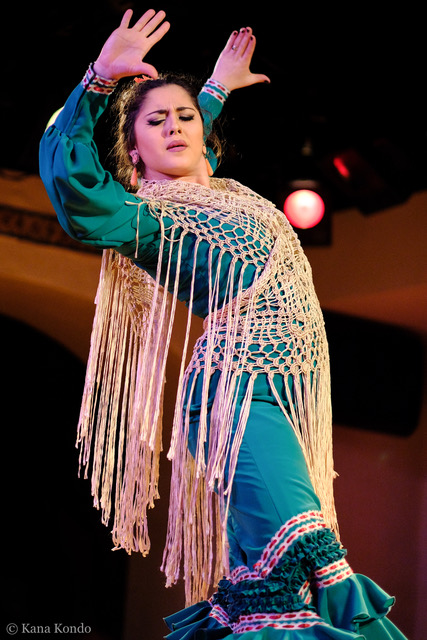
Flamenquito can be heard at fairs, gatherings with friends, festivals and on playlists throughout Spain.
It features guitars, rhythm, easy-to-learn choruses and an unmistakable connection with flamenco.
But is it really flamenco, or are we talking about a different musical genre?
The answer is more nuanced than it seems. Flamenquito blends elements of flamenco tradition with pop, rumba and other contemporary sounds.
Let’s explore its defining features, leading performers and relationship with traditional flamenco.
What is flamenquito?
Flamenquito is a popular term for flamenco-inspired music that incorporates pop, rumba and other genres.
It is usually associated with melodic songs, accessible rhythms, flamenco-style guitars and lyrics about everyday life.
It is not a recognised flamenco palo, like soleá, seguiriya or bulería. Nor is there one universally accepted academic definition that can classify every song given this label.
In practice, it describes a broad range of musical approaches. Some remain closely connected with flamenco singing and guitar.
Others are much closer to Spanish pop, while retaining certain vocal flourishes or rhythmic patterns.
Imagine a song with Spanish guitar, handclaps, a catchy chorus and a voice using melismas associated with flamenco singing.
Someone might describe it as flamenquito even if its musical structure is primarily pop.
That is one key to the term: it describes a recognisable sound rather than a genre governed by strict rules.
Where does flamenquito come from?
Flamenquito has no exact birth date or single creator.
Its development is linked to the transformations flamenco underwent during the twentieth century, especially as it began to engage more openly with other popular genres.
To understand how this sound took shape, it helps to look at some of its precedents.
Flamenco rumba and the opening up to new rhythms
Flamenco rumba was essential in bringing certain flamenco sounds to wider audiences.
Its festive spirit, the prominence of guitar and its suitability for celebrations made it especially fertile ground for experimentation.
During the second half of the twentieth century, artists such as Peret and Los Amaya helped popularise Catalan rumba, while others developed styles combining flamenco, rumba and popular music.
Not every rumba is flamenquito, but the influence of these styles is clear in many songs now described by that name.
New flamenco and the fusions of the 1970s and 1980s
Another pivotal moment came when artists began to challenge musical boundaries.
Paco de Lucía expanded the possibilities of flamenco guitar, and Camarón de la Isla explored new sounds, especially on La leyenda del tiempo, released in 1979.
At the same time, projects such as Veneno, Pata Negra and, later, Ketama incorporated rock, blues, pop and other traditions.
These projects cannot simply be reduced to flamenquito. Their importance lies in helping make the coexistence of flamenco and contemporary musical languages more familiar.
To explore this evolution further, read our article about the flamenco songs that made history.
The rise of flamenquito in the 1990s and 2000s
During the 1990s and especially the early twenty-first century, numerous groups brought flamenco-inspired fusions to commercial radio.
Their songs explored love, friendship, heartbreak and everyday experiences. Choruses became more prominent, while productions increasingly used techniques common in pop.
Groups such as Los Delinqüentes, Los Rebujitos and Fondo Flamenco represent different expressions of that evolution.
The result was music heard at concerts, family celebrations, fairs and informal gatherings alike.
Which artists and songs are associated with flamenquito?
It is more accurate to speak about individual songs and periods than to label an artist’s entire career.
Many musicians have moved between flamenco, rumba, pop and other influences.
These names provide a useful starting point:
-
Ketama: often cited for bringing flamenco roots into conversation with other music. “No estamos lokos (Kalikeño)” is one of the best-known songs associated with this scene.
-
El Barrio: combines a strong flamenco identity with the language of popular song.
-
Estopa: their combination of rumba, guitars and everyday stories frequently appears in flamenquito selections.
-
Los Delinqüentes: brought a Jerez flavour, streetwise spirit and a range of influences.
-
Fondo Flamenco: represents a particularly melodic, pop-oriented strand of flamenco-inspired music.
This list does not draw definitive boundaries. It is a starting point for hearing the differences and discovering which mix of rhythm, voice and melody appeals to each listener.
Where can you enjoy authentic flamenco in Barcelona? Tablao Flamenco Cordobes
Few experiences are as revealing for discovering flamenco as attending a live performance.
Located in the heart of Barcelona’s La Rambla, Tablao Flamenco Cordobes has championed authentic flamenco and its transmission between generations since 1970.
Founded by artists Luis Adame and Irene Alba, this historic tablao has welcomed major figures such as Camarón de la Isla, Farruco, Manuela Carrasco and many other flamenco legends.
Its stage still brings together leading performers, in a setting defined by the closeness between artists and audience.
Here flamenco does not depend on a completely fixed choreography. Singing, dancing and guitar interact live, leaving space for improvisation, emotion and each artist’s personality.
The experience can be complemented by traditional cuisine prepared with respect for its ingredients, including vegetarian, vegan, halal and gluten-free options.
It is an opportunity to discover two expressions of Spanish culture in one place: flamenco and gastronomy.
Check the programme and book your experience at Tablao Flamenco Cordobes to discover it up close.
To learn more, read our article on what to expect from a flamenco show in Barcelona.